 Fitness
Walking Pad Review: Are They Worth It for Home Use?
Walking Pad Review: Are They Worth It for Home Use?
On this page
SEO Title
Walking Pad Review: Are They Worth It for Home Use?
Meta Description
Walking pad review: what under-desk treadmills cost in 2026, the speed, incline, and capacity specs that matter, safety warnings, and who benefits.
Introduction
A walking pad is the treadmill that fits where a treadmill never could. No handrails, a deck just a few inches tall, speeds built for strolling instead of sprinting, and often a hinge that lets it fold in half and slide under a sofa. You step on before your first meeting, walk through your email, and quietly log a few thousand steps that would otherwise have happened never.
The category has grown up fast. WIRED's remote team and Tom's Guide's testers have each spent months walking on these machines to pick their 2026 favorites, and health outlets from Cleveland Clinic to TIME have weighed in on whether walking pads "really work." The honest short answer: as a way to add daily movement and break up sitting, a walking pad delivers — for desk-based people who will actually use it. As a replacement for real cardio equipment or the gym, it does not.
Two quick notes before buying: quality varies enough that you should read the fine print, and there is an active US safety warning on one brand of walking pads (covered in the FAQ below).
Honesty note: this review is based on published third-party testing (WIRED, Tom's Guide), manufacturer specifications, and public safety records — not hands-on testing, which we do not claim. Unverified details are labeled "Not Verified."
Product Overview
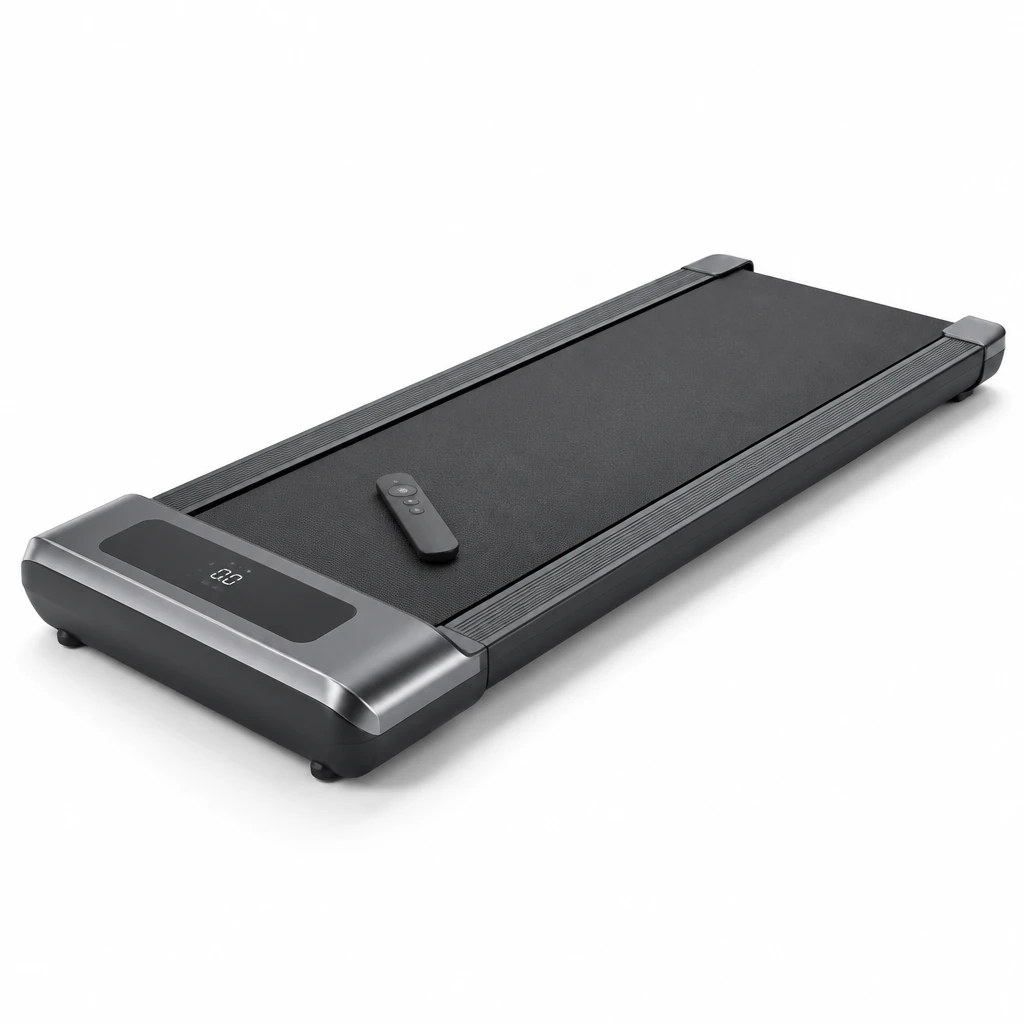
Walking pads — also sold as "under-desk treadmills" — are slim treadmills designed for walking only, usually topping out around 3.7 to 4 mph. The defining traits are the low, rail-less deck (often 4 to 6 inches tall and foldable) and the use case: walk while you work at a standing desk, in front of the TV, anywhere you would otherwise sit completely still. Most include a remote control, an LED display (time, speed, distance, calories), and wheels for shuffling around. Many pair with a companion app; some are genuinely useful, and some are, per multiple testers, the most annoying part of the product.
The market splits into four rough classes:
- Budget flat pads ($150–$300): simple, light, no incline — DeerRun Q1 Mini and similar. Tom's Guide's top pick lives here.
- Foldable pads ($300–$500): hinge in half to store under furniture (WalkingPad C2).
- Incline pads (up to ~14%): the fastest-growing sub-category; the Urevo CyberPad's 14% incline is one of the highest WIRED has tested.
- Hybrid walk/run machines: models with an adjustable handrail — 4 mph walking with the rail down, running up to 7.6 mph with it raised (Urevo Strol 2S Pro).
What separates a good pad from a frustrating one, according to testers: belt length versus your stride, weight capacity with real margin, how quiet it actually runs during calls, whether it folds or slides away, and whether the app misbehaves.
Key Features
- Low, space-saving deck. Most pads are 4–8 inches tall and about 40–57 inches long; foldables pack down further (WalkingPad C2: ~5.4 inches high per WIRED).
- Walking-range speeds. Typical top speed is 3.7–4 mph, with entry speeds around 0.5–1 mph. Hybrids with a raised handrail reach 7.6 mph for jogging.
- Incline options. The best current models reach 12–14% for steeper, workout-like walks; budget models are flat.
- Weight capacities of 220–400 lb, depending on class — the Urevo FoldiMix 5L and several newer models list 400 lb, while compact foldables often sit at 220–264 lb.
- Remote control as standard. Nearly every pad ships with one; app quality varies (KS Fit and Urevo's app both appear on tested models).
- Metrics display. LED screens show speed, time, distance, and calories; step tracking is on some models, not others.
- Transport wheels, no assembly. Machines weigh roughly 42–73 lb — "lightweight" is relative — but wheels make short moves easy, and most pads arrive ready to use out of the box.
Benefits
| Feature | What it means for you |
|---|---|
| Walk while you work | Steps accumulate during calls and inbox time instead of waiting for a spare hour |
| Slim, foldable deck | Fits small apartments, slides under sofas and desks, no dedicated gym corner needed |
| Low-impact speeds | Gentle enough for long sessions and easy to build a daily habit around |
| Removes the sitting block | A 2021 systematic review of 13 studies (BMC Public Health, cited by Tom's Guide) found under-desk treadmills increased energy expenditure and reduced sitting time |
| Incline capability | Turns a flat stroll into a steeper, leg-and-glute-focused walk on premium models |
| Lower cost than full treadmills | Quality pads run $150–$550; a feature-rich full treadmill costs far more |
| Quiet operation on good models | WIRED rates the Flexispot Auto Incline as the quietest pad its team has tested — usable during Zoom calls |
Pros and Cons
Pros
- Turns dead desk hours into thousands of extra steps — the whole reason the category exists
- Small footprint: slimmest models slide under furniture, and foldables halve their length
- Much cheaper than a full treadmill, with tested budget picks from around $149
- Enticingly easy to start: no assembly on most models, remote control, keep-it-simple operation
- Works for seniors, remote workers, and anyone who wants low-impact daily movement
Cons
- You cannot run on a rail-less walking pad — Tom's Guide says plainly: don't try
- Short belts punish taller users on budget models (a noted knock on the DeerRun Q1 Mini)
- App quality is inconsistent across brands; some models even need the app to log data properly
- Noise varies widely — take "quiet" claims with salt, especially for calls
- Durability is the category's soft spot; WIRED warns walking pads are notorious for wearing out after a few months to a few years of use
- Safety diligence needed: one brand family is under a US stop-use warning (see FAQ), and no-handrail machines demand balance and care
Specifications
Verified reference models with specs and prices as reported by the cited testers or fetched from the manufacturer on November 8, 2026. Prices change — [VERIFY CURRENT PRICE] before publishing or buying.
| Model | Price (Nov 8, 2026) | Max speed | Capacity | Deck / track | Incline | Warranty | Source |
|---|---|---|---|---|---|---|---|
| DeerRun Q1 Mini | $149 RRP | 3.8 mph | 300 lb | 43 x 20 x 4 in footprint | None | Not Verified | Tom's Guide (3-month tested pick) |
| WalkingPad Z1 | $299 (was $329) | 1–4 mph | 242 lb | 47.6 x 15.7 in walking area; folded 31.8 x 22 x 5.4 in | None | Not Verified | WalkingPad US store (fetched) |
| Urevo CyberPad for Home | $450 | 4 mph | 264 lb | 47.6 x 23.6 x 8.7 in; 43.3 in track | Up to 14% | 2 years | WIRED (2026 pick) |
| Flexispot Auto Incline | $500 | 4 mph | 275 lb | 50.3 x 21.9 x 6.3 in | 12% | 2 years | WIRED (quietest tested) |
| WalkingPad C2 | $499 | 3.7 mph | 220 lb | 56.9 x 20.4 x 4.9 in (folds to ~5.4 in high) | None | 1 year | WIRED (foldable pick) |
| Urevo Strol 2S Pro | $550 | 7.6 mph (4 mph in pad mode) | 265 lb | 50.8 in long deck footprint | Up to 9% | 2 years | WIRED (hybrid pick) |
Class context: WIRED puts solid no-frills walking pads under $200 and feature-rich models at $500+. Typical class specs: speed 0.5–4 mph, capacity 220–400 lb, deck 4–8 inches tall, weight 42–73 lb.
Who Should Buy It?
- Remote and hybrid workers who sit through long stretches of screen time and want steps without leaving the desk.
- Small-space dwellers — apartments, dorms, shared houses — where a full treadmill was never going to fit.
- People who "hate exercise but will walk while watching TV": the pad's low barrier to entry is its superpower.
- Seniors and low-impact walkers who want gentle daily movement; consult a physician first if you have balance or mobility concerns .
- Incline seekers: anyone who wants hill-walking intensity from a pad should look at the 12–14% class.
Who May Not Need It?
- Runners and serious cardio users: rail-less pads are walking-only. A treadmill or a gym membership fits better.
- Tall walkers with long strides who would be stuck on a short, narrow budget belt — size up in deck length or choose a longer model.
- Anyone who will not use it: Tom's Guide puts it plainly — an under-desk treadmill is only effective if you use it; if home walking is not your thing, this becomes an expensive dust collector.
- Households that cannot keep the floor clear or safely stow a 40–70 lb machine.
- People with balance limitations without medical clearance .
Alternatives
- A full treadmill: runs, inclines, handrails, and sturdier construction — more money and a lot more floor used, but the right tool for running and high-intensity training.
- Walking outdoors: free, and in mild weather it beats every gadget; walking pads are for the days you will not leave the house.
- A standing desk alone: simply standing breaks up sitting; a walking pad adds movement on top of it.
- An under-desk bike or elliptical: easier on balance and very small-space friendly, though less natural than walking.
- Gym membership or walking classes: when you want company, coaching, and heavier equipment, the gym still wins.
FAQ
Are walking pads worth it?
For desk-based people who will use one, yes: extra steps during otherwise still hours, and the published evidence supports it — a 2021 systematic review of 13 studies in BMC Public Health (cited in Tom's Guide's testing) found under-desk treadmills increased energy expenditure and reduced sitting time compared with conventional desks. What a walking pad will not do is replace real training: for running or maximal fitness gains, a treadmill, gym, or outdoor program does more. On weight loss, a pad supports a more active day, but results depend on overall activity and consistency — no machine does that part for you .
Walking pad vs treadmill: what is the difference?
A walking pad is a treadmill stripped to its walking bones: no handrails, a much slimmer and lighter deck that often folds, and speeds typically capped at 3.7–4 mph. A traditional treadmill runs much faster, supports running and high-intensity training, and usually adds more incline range — but it is bigger, heavier, and pricier. The line blurs with hybrid machines like the Urevo Strol 2S Pro, which walk at 4 mph with the rail down and run up to 7.6 mph with it raised.
Can you run on a walking pad?
Generally no — Tom's Guide's testers warn explicitly that you cannot run on rail-less under-desk treadmills and advise against trying; without handrails, faster speeds get genuinely hazardous. The exception is hybrid models with a locked handrail, where running speeds (up to ~7.6 mph) are built in.
Are any walking pads recalled or under safety warnings?
Yes — and buyers should know this. In 2026, the US Consumer Product Safety Commission warned consumers to stop using several Sperax walking pad and treadmill models (Pro, Q1, RM-01, RM-02) over fall and fire hazards — speed changes and sudden stops, plus reports of overheating and fires; WIRED advises avoiding the brand altogether (CPSC warning as cited in WIRED — verify current status at cpsc.gov before publishing). General rules: start slow, never run on a rail-less pad, keep children and pets clear of the belt, and unplug when not in use.
Do you need a standing desk to use a walking pad?
Not strictly — any flat, stable spot works for TV walking. But the desk pairing is the point for most buyers: walking while typing requires a desk you can raise to standing height, so check the folded height (often 4–6 inches) against your furniture and desk clearance before buying.
Final Verdict
The walking pad earns its viral status by solving one specific problem beautifully: too much sitting, too little walking, and no space or hour for the gym. The tested sweet spots are clear — around $149–$300 for a simple flat pad that does the daily-steps job (DeerRun Q1 Mini class), and $450–$550 if you want incline, near-silent operation, or hybrid walk/run versatility. Prioritize deck length for your stride, capacity with margin above your weight, warranty terms, and recent reviews over spec-sheet glamour.
Two last rules: do not run on a rail-less pad, and do not buy a recalled machine — the Sperax warning shows danger here looks like belts that change speed on their own. Buy from a reputable brand, start slow, unplug when finished — and if it keeps you strolling through meetings, it will have paid for itself.
Relevant Internal Links
- Fitness category hub (
/category/fitness) — anchor: "fitness gear guides" — placement: Final Verdict — why: hub page for crawl depth and related fitness content. - Qi2 Magnetic Power Bank (
/qi2-power-bank) — anchor: "Qi2 magnetic power bank" — placement: "Who Should Buy It?" — why: desk-tech companion for the remote-work setups this review targets. - Walking pad vs treadmill comparison (
/walking-pad-vs-treadmill) — anchor: "walking pad vs treadmill comparison" — placement: FAQ — why: expand the comparison into a dedicated decision guide.
Affiliate Disclosure
This article may contain affiliate links. If you buy through them, we may earn a commission at no extra cost to you.
Sources
All URLs checked or surfaced on 2026-11-08 (US market). Prices move — verify before publishing or buying.
- WIRED — "4 Best Walking Pads for Small Spaces and Standing Desks (2026)" (wired.com/story/best-walking-pads/), fetched 2026-11-08: Urevo CyberPad ($450, up to 14% incline, 4 mph, 264 lb, 2-yr warranty), WalkingPad C2 ($499, 3.7 mph, 220 lb, folds to ~5.4 in high, 1-yr), Urevo Strol 2S Pro ($550, 7.6 mph with rail up / 4 mph rail down, 265 lb), Flexispot Auto Incline ($500, quietest tested, 12% incline, 4 mph, 275 lb); honorable mentions incl. Toputure TP6 ($238), GoYouth ($270), Urevo SpaceWalk 5L ($400); price guidance (<$200 basic, $500+ premium); durability note; CPSC Sperax stop-use warning (Pro, Q1, RM-01, RM-02 — fall/fire hazards).
- Tom's Guide — "The best walking pads in 2026: the best under-desk treadmills, tested and rated" (tomsguide.com/best-picks/best-under-desk-treadmills), fetched 2026-11-08: DeerRun Q1 Mini best overall ($149 RRP; 3.8 mph; 300 lb; 43 x 20 x 4 in; 41.8 lb; no incline; 3-month test; short-belt caveat for taller users); WalkingPad Z1 pick; Urevo FoldiMix 5L under $500; "you can't run on any of these under-desk treadmills" guidance; BMC Public Health 2021 systematic review (13 studies) on under-desk treadmill effectiveness.
- WalkingPad US store — WalkingPad Z1 product page (walkingpad.com/products/walkingpad-z1-under-desk-treadmill), fetched 2026-11-08: $299 (was $329); speed 1–4 mph; walking area 47.6 x 15.7 in; capacity 242 lb; folded 31.8 x 22 x 5.4 in; net weight 51 lb; KS Fit app; 110V.
- U.S. CPSC — warning on Sperax walking pads and treadmills, 2026 (cpsc.gov/Warnings/2026/...): cited via WIRED; not fetched directly — verify current status at cpsc.gov before publishing.
- Project research files — MASTER-30-products-US-2026-11-08.md and category-3-seasonal-gifts-pets-fitness.md (product #9): trend evidence (WIRED/Forbes/Tom's Guide 2026 coverage; Cleveland Clinic, SELF, TIME "worth it" coverage), live keyword set ("walking pad with incline," "walking pad vs treadmill," "quiet under desk treadmill"), competitor-gap analysis.
Verification note: no hands-on testing. Specs and prices above are as stated by the cited testers or the manufacturer's store and were captured on 2026-11-08; confirm current pricing and any safety notices before publishing.
Internal links
- Target:
/category/fitness(create if missing) — anchor: "fitness gear guides" — placement: Final Verdict — why: category hub for crawl depth. - Target:
/qi2-power-bank— anchor: "Qi2 magnetic power bank" — placement: "Who Should Buy It?" — why: desk-tech companion for remote workers. - Target:
/walking-pad-vs-treadmill(create if missing) — anchor: "walking pad vs treadmill comparison" — placement: FAQ — why: decision-stage long-tail ("walking pad vs treadmill") deserves a dedicated guide.
Note: product images on this page are AI-generated illustrations, not photographs of the actual product.