 Home & Decor
Roomba 205 DustCompactor Review: 60 Days Without a Dock
iRobot Roomba 205 DustCompactor Review: 60 Days Without a Dock
Quick Answer
The iRobot Roomba 205 DustCompactor is a unique robot vacuum that replaces the bulky auto-empty dock tower with an internal motorized paddle that compresses debris, claiming up to 60 days between manual emptyings. Independent lab tests from CNET record stellar hardwood cleaning (99.27% sand pickup), but real-world reviews from PCMag and TechRadar highlight drawbacks including a short 59-minute battery life, mediocre carpet performance, and weak obstacle avoidance.
Quick Product Verdict
It is an interesting space-saving machine for hard-floor apartments, but at its list price, stiff competition from self-emptying budget models and alternative vacuums makes it a niche choice rather than an easy default.
Who This Product Is Best For
- Apartment and small-space dwellers: For those who cannot spare the floor space for a 14-inch-tall auto-empty tower, the tiny charge-only pad fits discreetly under furniture.
- Hard-floor homes: The vacuum excels on hard surfaces, recording top-tier sand extraction in lab tests (99.27% on hardwood).
- Buyers who dislike consumable bags: Because the dustbin is bagless and uses mechanical compression, there are no ongoing bag purchases required.
Who Should Avoid It
- Carpet-heavy households: Independent testing found carpet pickup to be mediocre.
- Large, multi-room single-floor layouts: The tested 59-minute battery runtime is relatively short and may force the vacuum to recharge mid-job.
- Households with clutter: With limited obstacle avoidance, homes with cords, toys, or stray socks on the floor will require tidying before each run.
What Is the iRobot Roomba 205 DustCompactor?
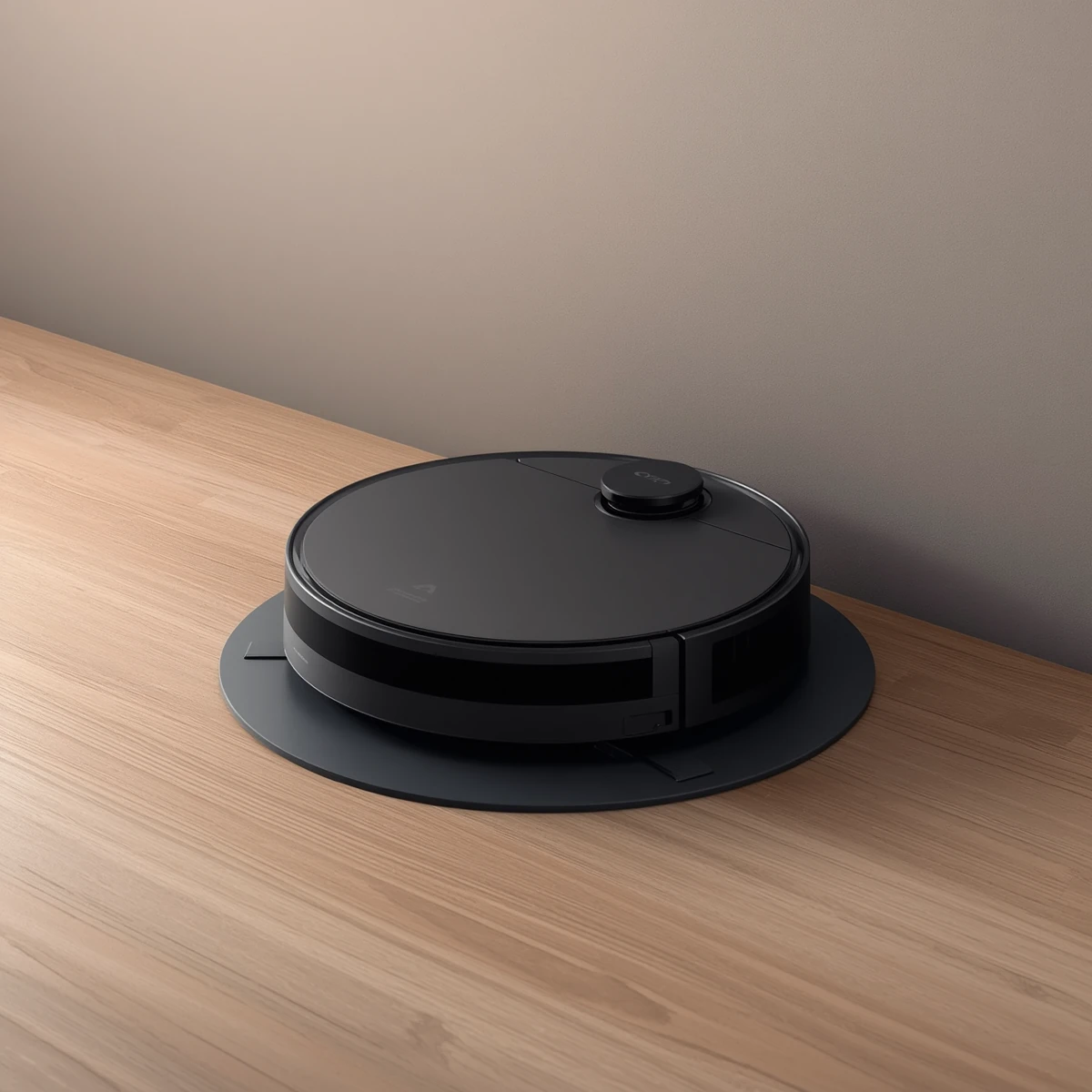
The iRobot Roomba 205 DustCompactor is a robot vacuum designed to solve a specific ownership friction point: the physical footprint of self-emptying dock towers. Traditional robot vacuums require a large charging base equipped with a suction motor and a disposable bag. The Roomba 205 takes a different approach by moving the compression mechanism directly inside the robot. A motorized internal paddle swings back and forth during and after cleaning runs, pressing collected hair and debris tightly toward the back of the onboard bin. This mechanical compression allows the ~1.5-liter bin to hold significantly more material, enabling iRobot's claim of up to 60 days between manual emptyings while charging on a minimalist, low-profile charging pad.
Key Specifications
| Specification | Details | Buyer Relevance |
|---|---|---|
| Model | iRobot Roomba 205 DustCompactor (Vac) / 205 DustCompactor Combo | Available in vacuum-only or hybrid vacuum-and-mop variants. |
| Dust Management | Onboard DustCompactor (motorized paddle compression, bagless) | Reduces manual emptying frequency without requiring a tower dock. |
| Claimed Emptying Interval | Up to 60 days | Minimizes day-to-day maintenance chores. |
| Navigation | LiDAR with systematic row cleaning | Maps rooms efficiently in straight lines rather than random bouncing. |
| Battery Life (Tested) | 59 minutes (PCMag lab test) | Relatively short runtime; suited for smaller homes or specific zone cleans. |
| Robot Dimensions | 14.1" × 14.09" × 3.98" | Low profile allows it to slide underneath many furniture pieces. |
| Charging Dock | Charge-only pad (~3.5" × 5.9" × 5.3" per TechRadar) | Extremely compact footprint compared to auto-empty towers. |
| Mopping | Fixed pad (Combo variant only) | Handles light surface dusting, but lacks advanced customization or auto-refill features. |
What Comes in the Box
- iRobot Roomba 205 DustCompactor robot
- Compact charge-only pad and power adapter
- Multi-surface brush roll and edge-sweeping brush
- Hybrid water tank and mop pad (Combo model only)
- Quick start guide and documentation
Design and Build Quality
The physical footprint of the robot itself is relatively standard for a modern LiDAR-guided cleaner, measuring roughly 14 inches across and under 4 inches tall. This low clearance helps it navigate beneath couches, cabinets, and low bed frames. The standout engineering choice is the internal compaction assembly. Rather than relying solely on open space, the motorized paddle inside the bin physically squashes debris. The charging dock is little more than a slim plastic mat with an integrated plug, making it easy to tuck into a corner or slide beneath an entryway console out of sight.
Performance
Independent laboratory testing from outlets like CNET and PCMag provides a clear picture of how the 205 performs in real environments. On bare hardwood floors, CNET Labs measured an exceptional 99.27% sand-removal rate, placing it at the very top tier of its testing cohort for hard-surface debris extraction. However, performance drops on soft surfaces. PCMag's testing characterized carpet cleaning as mediocre, noting that embedded fine dirt and pet hair require multiple passes or stronger agitation. Furthermore, PCMag's benchmark testing recorded a battery runtime of 59 minutes, which trails many competing models that cross the 100-minute mark.
Ease of Use
Setup is handled through the iRobot Home app for iOS and Android, which guides users through Wi-Fi pairing and initial LiDAR home mapping. Once mapped, the app allows users to schedule cleanings, select specific rooms to target, and adjust cleaning preferences. Maintaining the robot involves pulling out the onboard dustbin and emptying the compressed debris block into a trash receptacle. Because the system is entirely bagless, upkeep involves zero ongoing consumable purchases, though users must manually empty the bin every few weeks depending on home size and pet activity.
Safety and Reliability
The Roomba 205 relies on standard electronic safety protections, including overcurrent protection for the brush motor and battery thermal monitoring. LiDAR navigation allows it to map rooms safely in complete darkness without bumping forcefully into baseboards or furniture legs. However, independent reviewers noted that obstacle avoidance is limited: CNET's testing observed that the unit successfully bypassed only a small fraction of scattered test objects, meaning stray cables, charging cords, and small toys should be cleared from the floor before starting a cleaning cycle.
Pricing and Value for Money
List pricing for the Roomba 205 DustCompactor Combo sits at $469.99, while the vacuum-only variant lists around $449.00 (with street prices fluctuating significantly during promotional retail events). Evaluating value requires weighing the space saved by abandoning an auto-empty tower against the performance compromises. While the compaction technology successfully minimizes manual emptying frequency on hard floors, the short battery runtime, basic mopping capabilities, and lack of advanced obstacle avoidance mean buyers must decide if the compact dock justifies the upfront investment compared to traditional self-emptying alternatives.
Pros and Cons
| Pros | Cons |
|---|---|
| Excellent hardwood cleaning performance (99.27% sand pickup in CNET lab tests). | Tested battery life is limited to 59 minutes per charge. |
| Tiny charge pad footprint solves space constraints for apartments and small rooms. | Carpet cleaning performance is uninspired. |
| Bagless compaction bin eliminates the recurring cost of replacement dust bags. | Basic obstacle avoidance struggles with scattered household items and cords. |
| Reliable LiDAR navigation maps rooms quickly and cleans in efficient rows. | Mopping is rudimentary with no automatic water refill or app customizability. |
Limitations and Trade-Offs
The primary engineering trade-off of the Roomba 205 is convenience versus autonomy. By eliminating the auto-empty tower, iRobot saved valuable floor space and removed the need for disposable bags. However, the user retains the chore of manual bin maintenance—albeit stretched across weeks rather than days. Additionally, homes with mixed flooring or dense carpet will find that the vacuum's cleaning strengths lean heavily toward hard surfaces, and households with active pets or children must remain diligent about floor clutter due to the limited object-detection capabilities.
Competitor Comparison
| Product | Best For | Strength | Limitation | Pricing Note |
|---|---|---|---|---|
| iRobot Roomba 205 | Small spaces & hard floors | Bagless compaction & tiny charging footprint | Short battery & basic carpet pickup | List $469.99 Combo / $449 Vac |
| 3i G10 Plus | Budget-conscious buyers | Bagless dirt compression at lower cost | No self-empty base & pushes hair on carpet | Approximately $250 |
| Shark PowerDetect NeverTouch Pro | Comprehensive automated cleaning | Sanitizing base station & excellent hardwood pickup | Large dock footprint & inconsistent carpet pet-hair pickup | Varies by retailer promotions |
Best Alternatives
- iRobot Roomba 105 (with AutoEmpty Dock): For buyers who prefer a traditional self-emptying experience, the Roomba 105 series pairs lower entry pricing with a true auto-empty base station that stores debris in sealed bags for up to 75 days.
- 3i G10 Plus: Sharing a similar dirt-compression concept in a bagless design at a lower price point (~$250), this alternative appeals to shoppers looking for compaction technology without paying flagship prices.
Buying Guide
When deciding whether to purchase the Roomba 205 DustCompactor, consider your floor plan and lifestyle constraints first. If your home consists primarily of hardwood or tile, square footage is modest, and you have zero floor space to spare for a bulky vacuum tower, the 205 offers a compelling form factor. Conversely, if your home features thick carpets, active shedding pets, or floors cluttered with everyday items, traditional self-emptying robots with advanced hazard-avoidance cameras will deliver a more frictionless automated cleaning experience.
FAQs
On this page
How does the DustCompactor bin work?
A motorized plastic paddle inside the dustbin swings back and forth to compress hair and debris toward the back of the container, allowing it to hold significantly more dirt than its physical dimensions suggest.
Does the Roomba 205 empty itself?
No. Unlike robots with auto-empty docking towers, the 205 stores debris onboard. You must manually empty the compressed bin into a trash can every few weeks.
Is the Roomba 205 good for thick carpets?
Independent reviews indicate that while hardwood cleaning is exceptional, carpet pickup is mediocre compared to specialized deep-cleaning robotic vacuums.
Does it require replacement dust bags?
No. The DustCompactor system is entirely bagless, saving you from purchasing ongoing consumable dust bags.
Final Verdict
The iRobot Roomba 205 DustCompactor is an innovative solution for apartment renters and hard-floor homeowners who want automated cleaning without sacrificing floor space to a bulky charging tower. While its compaction technology successfully stretches out manual emptying intervals, compromises in battery runtime, carpet performance, and obstacle avoidance mean it suits specific spatial needs rather than serving as an all-around universal recommendation.
Affiliate Disclosure
Affiliate Disclosure: This article may contain affiliate links. If you buy through these links, we may earn a commission at no extra cost to you. Our recommendations remain based on available evidence, product fit, and buyer usefulness.